
Was the Patient Able to Make an Informed AMA Decision?
If you are reviewing an AMA malpractice claim, start with the emergency department record, not the signed form. A discharge against medical advice expert should assess whether the patient could understand the recommended care, grasp the risks of leaving, weigh the options, and state a clear choice. The review should also cover what the clinician explained, any signs of impairment, and the plan offered for safer care and follow-up.
About 1% to 2% of hospital discharges are AMA, and these patients face higher readmission rates. But a poor outcome alone does not show what the patient understood or whether the care was appropriate.
I’m Dr. Edward Mallory, and I provide independent Emergency Medicine reviews for attorneys on either side of these cases.
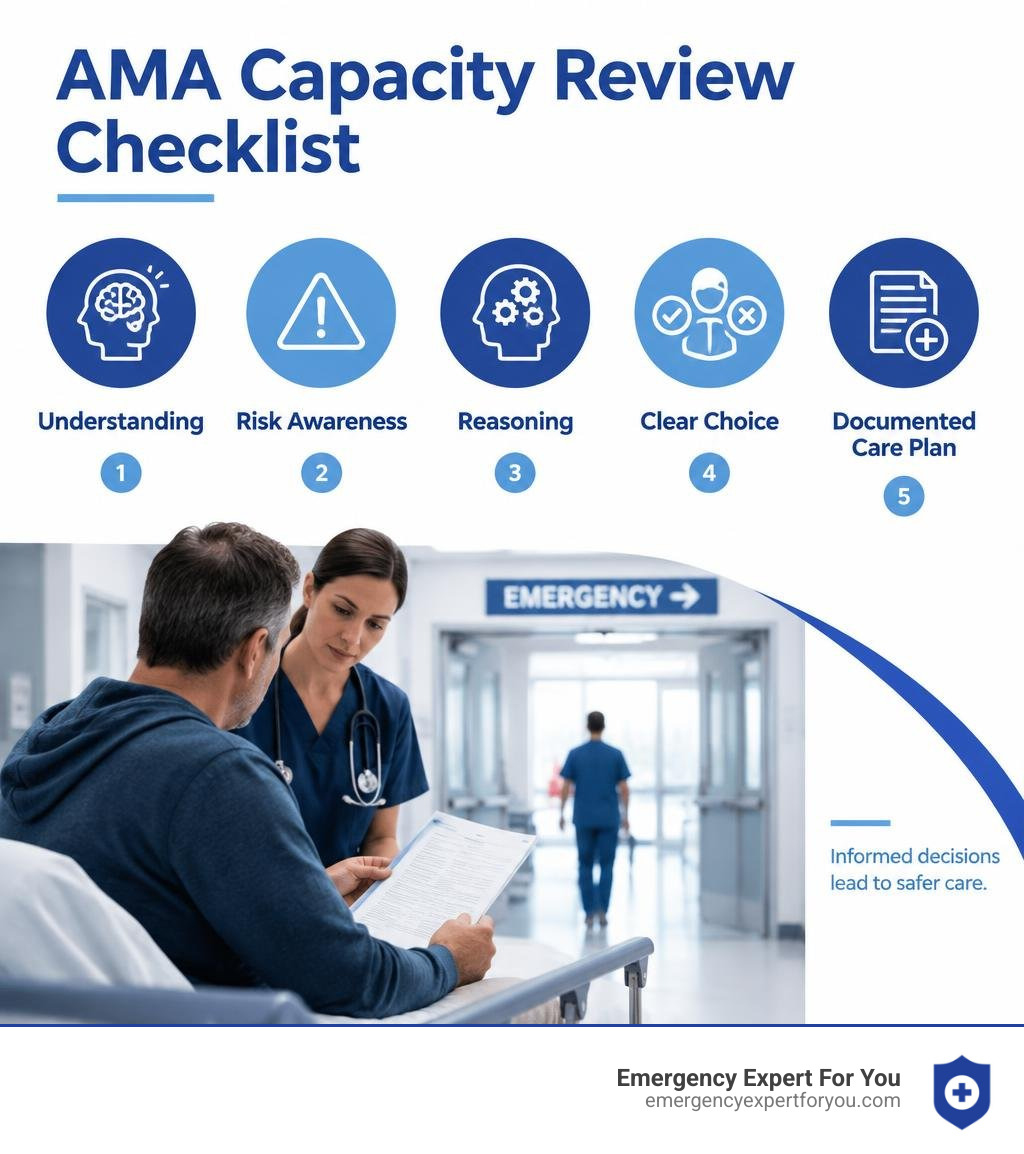
Understanding AMA Discharges, Elopement, and Associated Legal Risks

When an emergency department patient decides to leave before completing diagnostic workups or therapeutic interventions, the clinical and legal stakes immediately escalate. In the emergency setting, providers frequently care for individuals at their most vulnerable moments—coping with acute pain, respiratory distress, metabolic derangements, or altered mental status. While competent adult patients hold a fundamental common-law and constitutional right to bodily integrity and self-determination, clinicians possess an affirmative duty to ensure that any refusal of necessary care is fully informed and voluntary.
From a liability standpoint, cases involving premature departures carry substantial exposure. Research indicates that patients who leave against medical advice are approximately 10 times more likely to initiate litigation than the typical emergency room patient, resulting in roughly one lawsuit for every 300 instances of AMA discharge. When complications arise post-departure, allegations of medical malpractice in the emergency room frequently center on whether the clinical team adequately assessed patient cognition, communicated diagnostic possibilities, and provided appropriate harm-reduction discharge plans.
Defining AMA Discharge vs. Elopement and Informed Refusal
In clinical record reviews, we must distinguish between three distinct forms of patient departure or treatment refusal:
- Discharge Against Medical Advice (AMA): A formal departure where a patient with verified decision-making capacity explicitly chooses to leave the facility despite the treating clinician’s explicit recommendation to remain for further evaluation or treatment. This process involves a documented bedside discussion of specific risks, benefits, and alternatives.
- Elopement: An event where a patient leaves the clinical environment without notifying staff, without undergoing a formal capacity evaluation, and without participating in an informed refusal discussion. Elopement frequently occurs among patients experiencing untreated delirium, acute intoxication, or psychiatric distress, raising distinct nursing and monitoring standard-of-care questions.
- Informed Refusal: A scenario where a competent patient declines a specific test, procedure, or medication (such as refusing a lumbar puncture, blood transfusion, or contrast agent) but agrees to remain in the facility for ongoing monitoring, alternative treatments, or general medical care.
| Departure Category | Communication Status | Clinical Capacity Assessed? | Treatment Status |
|---|---|---|---|
| AMA Discharge | Explicit dialogue with provider | Yes (mandatory requirement) | Patient leaves against explicit medical advice |
| Elopement | None (patient leaves unnoticed/unannounced) | Often unassessed or compromised | Patient leaves prematurely without staff awareness |
| Informed Refusal | Collaborative bedside dialogue | Yes (mandatory requirement) | Patient declines specific intervention but remains for alternative care |
Morbidity, Readmission, and Mortality Risks Following AMA Departures
The medical literature consistently demonstrates that leaving the hospital or emergency room prematurely correlates with adverse clinical outcomes across every demographic. Nationally, between 1% and 2% of all hospital discharges occur against medical advice, yet these cases generate a disproportionate burden of acute decompensation.
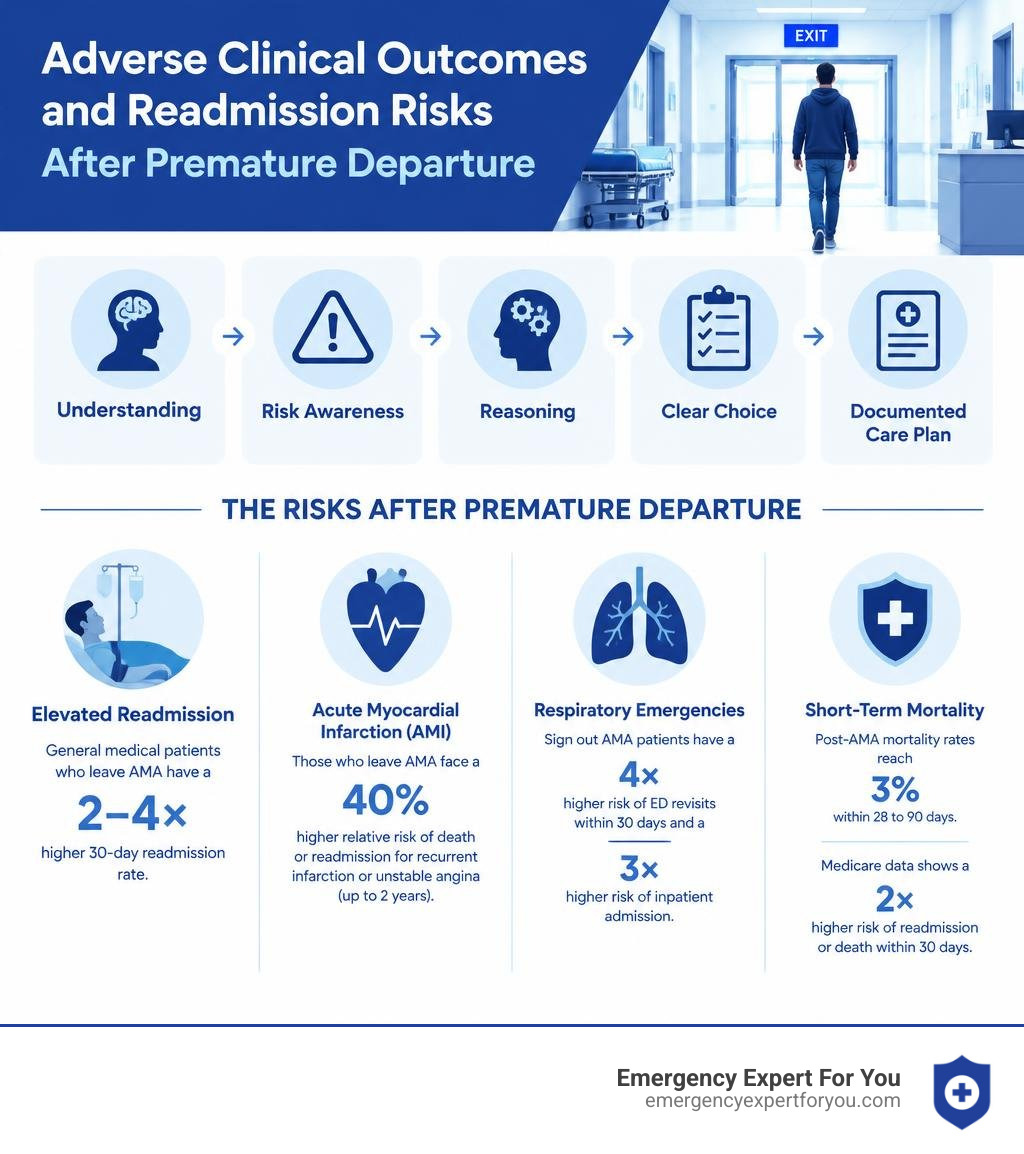
- Elevated Readmission: General medical patients who leave AMA exhibit a two- to fourfold increase in 30-day readmissions. In controlled studies, general medicine patients discharged AMA experienced a 21% readmission rate within the first 15 days, compared to just 3% in matched control cohorts.
- Acute Myocardial Infarction (AMI): In a large retrospective analysis of nearly 100,000 patients admitted with acute myocardial infarction, those who left AMA faced a 40% higher relative risk of death or readmission for recurrent infarction or unstable angina for up to two years post-discharge.
- Respiratory Emergencies: Patients presenting with acute asthma exacerbations who sign out AMA have a fourfold higher risk of emergency department revisits within 30 days (21.7% versus 5.4%) and nearly a threefold higher risk of subsequent inpatient admission (8.5% versus 3.2%).
- Short-Term Mortality: Data published across hospital cohorts indicate post-AMA mortality rates reaching 3% within 28 to 90 days. Furthermore, Medicare data demonstrates that beneficiaries who depart against medical advice are over twice as likely to be readmitted or die within 30 days compared to normally discharged peers.
However, an adverse outcome or rapid readmission does not, by itself, demonstrate that medical negligence occurred. Clinical decisions must always be scrutinized based on the patient’s acute presentation, the diagnostic information available to the treating physician at that exact moment, and the quality of the documented capacity evaluation.
How Clinicians and Courts Evaluate Decision-Making Capacity

A central issue in AMA litigation is determining whether the patient possessed the legal and functional capacity to refuse care at the precise time of departure. In emergency medicine, it is critical to distinguish between competency and decision-making capacity. Competency is a legal status determined exclusively by a judge in a court of law. In contrast, decision-making capacity is a dynamic, clinical determination made at the bedside by a healthcare provider for a specific decision at a specific point in time.
A patient may possess the capacity to refuse an intravenous catheter while lacking the capacity to refuse life-saving stabilization for severe septic shock or intracranial hemorrhage. When evaluating the 4 Ds of a medical malpractice lawsuit—duty, dereliction (breach), direct causation, and damages—the presence or absence of verified decision-making capacity often dictates whether a physician’s decision to permit departure conformed to the standard of care.
The Four-Ability Model for Assessing Patient Decision-Making Capacity
The standard of emergency medical care relies on the well-established “Four-Ability Model” to determine whether an adult possesses decision-making capacity to refuse recommended hospitalization or diagnostics. Clinicians must systematically evaluate whether the patient can:
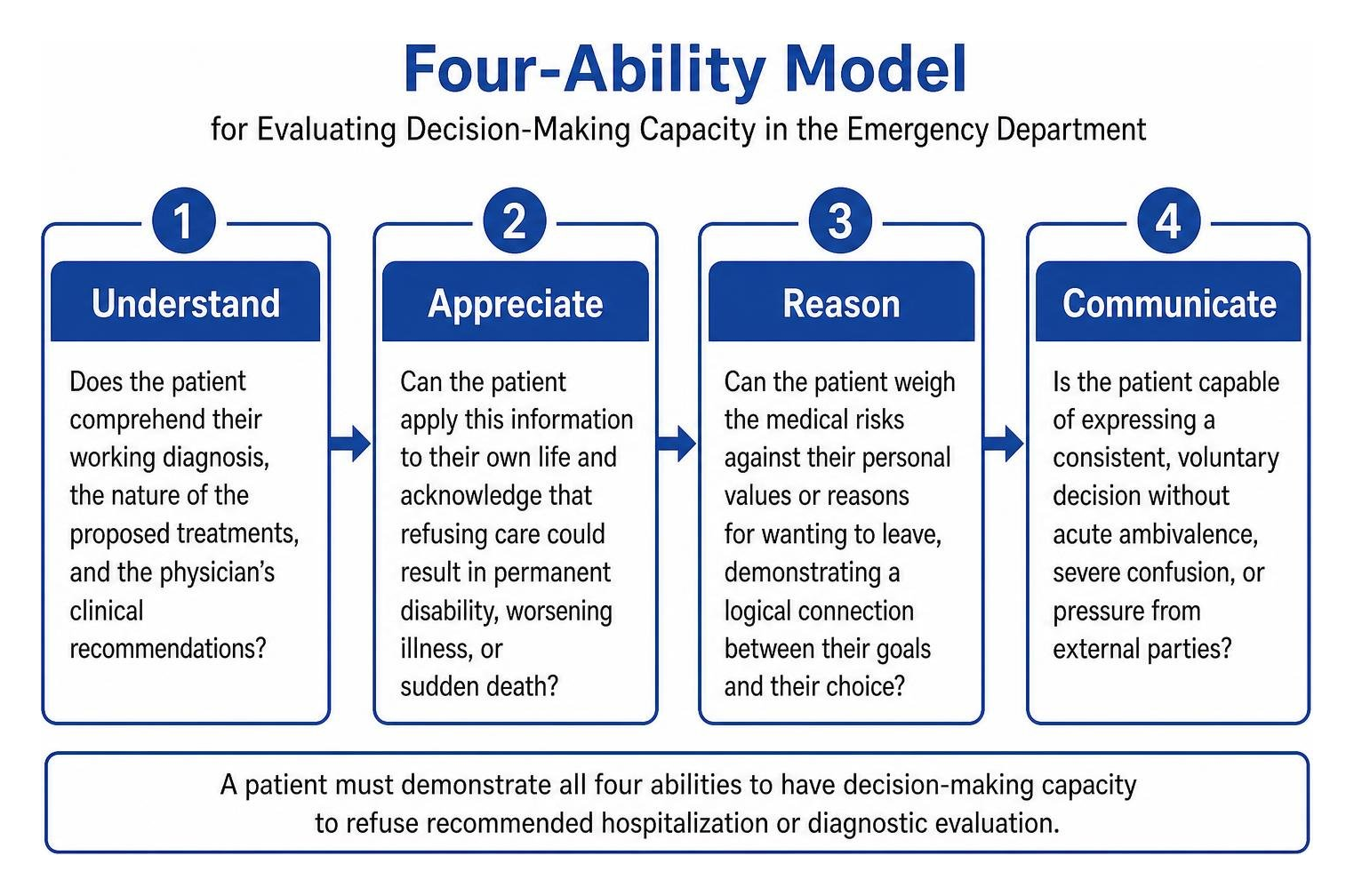
- Understand Relevant Information: Does the patient comprehend their working diagnosis, the nature of the proposed treatments, and the physician’s clinical recommendations?
- Appreciate the Medical Situation and Consequences: Can the patient apply this information to their own life and acknowledge that refusing care could result in permanent disability, worsening illness, or sudden death?
- Engage in Rational Reasoning and Manipulation of Information: Can the patient weigh the medical risks against their personal values or reasons for wanting to leave, demonstrating a logical connection between their goals and their choice?
- Communicate a Clear and Stable Choice: Is the patient capable of expressing a consistent, voluntary decision without acute ambivalence, severe confusion, or pressure from external parties?
Clinicians should validate these components using the “teach-back” method—asking open-ended questions that require the patient to explain the clinical situation in their own words, rather than simply accepting monosyllabic “yes” or “no” responses.
How a Discharge Against Medical Advice Expert Assesses Informed Refusal
When a discharge against medical advice expert reviews a disputed emergency department departure, the analysis extends far beyond confirming the presence of a signature on a pre-printed form. Blanket statements such as “patient advised of risks including death” carry minimal evidentiary weight if the medical record fails to reflect an individualized, substantive risk disclosure.
To evaluate whether a departure satisfied the professional standard of care, the expert reviews the medical record to determine if the physician satisfied the core requirements to prove medical malpractice defenses or breaches:
- Specificity of Risk Communication: Did the clinician warn the patient of specific, foreseeable complications (e.g., advising a patient with chest pain of potential coronary artery occlusion, fatal dysrhythmia, or irreversible myocardial damage rather than reciting vague warnings)?
- Identification of Impairment: Did the physician screen for and document the absence of metabolic derangements, hypoxia, head trauma, severe intoxication, or toxic encephalopathy that would impair cognition?
- Exploration of Patient Motivations: Did the clinician engage in shared decision-making to identify why the patient wanted to leave (such as child care responsibilities, fear of hospital costs, unmanaged pain, or substance withdrawal)?
- Harm Reduction and Alternatives: Did the medical team offer reasonable outpatient alternatives, such as prescribing oral antibiotics, arranging immediate next-day clinic follow-up, or dispensing bridging medications?
Managing High-Risk Clinical Scenarios and Debunking AMA Myths
Managing an impending AMA departure requires careful balancing between respecting patient autonomy and upholding the physician’s ethical duty of beneficence. In high-pressure emergency environments, misunderstandings regarding legal constraints, emergency medical laws, and financial rules can lead to poor clinical choices. Understanding the difference between malpractice and negligence requires examining how clinical teams handle high-risk presentations where cognitive capacity is actively compromised.
Special Populations: Intoxication, Psychiatric Emergencies, and Substance Use
Certain patient populations present distinct challenges when demanding immediate discharge:
- Acute Alcohol and Drug Intoxication: A measurable blood alcohol concentration (BAC) or positive urine drug screen does not automatically mean a patient lacks capacity. Conversely, an alert posture does not guarantee it. The clinical question is functional: can the patient process clinical risks, demonstrate coherent reasoning, and ambulate safely? Allowing an acutely intoxicated trauma patient with potential intracranial injury to leave without clinical sobriety or a surrogate decision-maker falls below professional standards.
- Substance Use Disorders (SUD): Patients with active SUD are up to three times more likely to leave against medical advice, frequently driven by the onset of unmanaged opioid or alcohol withdrawal. Best practices require early, proactive management of withdrawal symptoms (e.g., initiating buprenorphine, methadone, or supportive symptom relief) and treating pain aggressively to stabilize the patient so they can participate in treatment.
- Psychiatric Crises and Suicidality: Patients experiencing acute psychosis, severe depression with active suicidal ideation, or profound mania lack the legal and functional capacity to sign out AMA. Under state emergency detention frameworks, clinicians have an obligation to place the patient on an involuntary medical or psychiatric hold when they present an imminent danger to themselves or others.
- Pediatric Refusals: Minors cannot legally sign out AMA. When a parent or substitute decision-maker attempts to withdraw a child from life-sustaining emergency care, clinicians cannot simply accept an AMA signature. If the refusal places the child at risk of substantial harm or death, the emergency team must intervene, utilize administrative holds, and notify child welfare authorities.
The Insurance Denial Myth and Provider Liability Pitfalls
One of the most persistent myths in modern medicine is that health insurance carriers automatically deny claims if a patient signs out AMA. Research shows that this misconception is alarmingly common among healthcare workers: in one study, 44% of attending physicians and 69% of resident physicians incorrectly believed that leaving AMA resulted in financial denial from insurers. Attendings who held this false belief were significantly more likely to convey this inaccurate warning to patients.
Using the threat of financial ruin to pressure a patient into remaining admitted is both factually incorrect and ethically problematic. Studies examining thousands of AMA discharges have found no evidence that commercial insurers or Medicare refuse payment for medically necessary hospital services provided prior to the patient’s departure.
Furthermore, healthcare providers frequently fall into common liability traps:
- Believing the AMA Form Shields Against Liability: A signed AMA form is not a liability waiver. Courts routinely treat pre-printed liability waivers on hospital discharge forms as void against public policy. Legal protections depend entirely on whether the patient was clinically capable and given an adequate informed refusal discussion.
- Punitive Discharges: Withholding prescriptions, refusing to provide outpatient follow-up referrals, or denying transportation because a patient refuses admission breaches the standard of care. Clinicians retain a duty to mitigate harm even when a patient declines optimal inpatient recommendations.
When to Retain a Discharge Against Medical Advice Expert for Litigation
Evaluating an emergency department departure requires in-depth familiarity with emergency medicine workflows, bedside capacity assessment methods, and documentation standards. When attorneys on either side assess a claim involving a post-AMA injury, consulting a board-certified Emergency Medicine specialist provides clarity on complex clinical records.
Counsel reviewing prospective matters can learn how to determine if you need a medical expert witness to establish whether the clinical team’s actions met or breached the standard of emergency care. Understanding the fundamental necessity of medical expert witnesses is essential for objectively evaluating causation and liability before proceeding into costly discovery.
Medical Record Elements Reviewed by a Discharge Against Medical Advice Expert
A comprehensive emergency medicine record review examines every detail of the clinical chart to reconstruct what occurred at the bedside:
- EHR Nursing and Provider Timestamps: Reviewing the sequence of vital signs, lab result reporting, provider notes, and nursing entries to verify when the patient expressed a desire to leave and how quickly staff responded.
- Documented Mental Status Examinations: Reviewing formal cognitive evaluations, orientation assessments, and Glasgow Coma Scale (GCS) scores immediately prior to discharge.
- Substance and Medication Administration: Analyzing whether sedatives, narcotics, or paralytics given during treatment could have altered the patient’s cognitive baseline.
- Specifics of the Risk Discussion: Reviewing provider notes to see if specific risks, working differential diagnoses, and the possibility of death or permanent disability were clearly explained.
- Discharge Summaries and Prescriptions: Verifying whether the clinical team provided take-home medications, explicit “red-flag” return precautions, and feasible outpatient follow-up options.
- Witness Attestations: Reviewing documentation from bedside nurses, family members, or security personnel who observed the informed refusal dialogue.
Establishing Standard of Care, Causation, and Damages in AMA Lawsuits
In cases involving emergency medicine departures, establishing liability requires proving more than just an imperfect discharge. The plaintiff must demonstrate that the provider breached the standard of care and that this breach directly caused the patient’s injury. Conversely, a strong defense shows that the clinician followed reasonable capacity screening protocols, delivered clear risk warnings, and respected the autonomy of a competent patient.
Attorneys can consult resources on the value of a medical expert witness and review why attorneys need an expert witness when preparing an affidavit of merit, structuring deposition inquiries, or evaluating trial testimony. If you are preparing for litigation, you can also review how to talk to your attorney about working with a medical expert witness to ensure all medical aspects of the case are thoroughly addressed.
Frequently Asked Questions About AMA Malpractice Claims
Is an Against Medical Advice (AMA) form legally binding in a malpractice suit?
No. An AMA form is not a binding legal contract or an exculpatory waiver that shields clinicians from liability. In medical malpractice litigation, a signed form simply serves as documentary evidence that a conversation took place. The legal and medical question remains whether the patient had decision-making capacity and received an adequate informed refusal discussion before signing.
Can a hospital refuse to let an impaired patient leave AMA?
Yes. If an attending clinician determines that a patient lacks decision-making capacity due to acute intoxication, metabolic encephalopathy, severe head trauma, delirium, or an acute psychiatric crisis, the hospital has an obligation to prevent the patient from departing. Holding an incapacitated patient for medical stabilization is legally protected under implied consent principles and state emergency detention statutes; releasing an incapacitated patient who suffers foreseeable harm can expose the facility to liability.
What must be documented in the EHR to defend an AMA departure?
To document an AMA departure appropriately, the medical record should clearly include:
- An assessment of the patient’s decision-making capacity using the Four-Ability framework.
- The specific, individualized medical risks, alternatives, and consequences explained to the patient.
- The patient’s stated reasons for leaving and their understanding of the risks.
- Any attempts to negotiate or offer reasonable outpatient alternatives.
- Clear discharge instructions, bridging prescriptions, and an explicit statement that the patient is welcome to return to the emergency department at any time.
Conclusion
Evaluating malpractice claims involving departures against medical advice requires an objective, thorough review of the emergency medicine record. A bad outcome following an AMA discharge does not automatically establish medical negligence, nor does a signed discharge form automatically protect a healthcare provider. Liability depends on the patient’s clinical presentation, their cognitive capacity at the bedside, and the quality of the informed refusal discussion.
At Emergency Expert For You, Dr. Edward Mallory provides independent, unbiased medical record reviews, affidavits, and expert testimony for both plaintiff and defense counsel. With over 30 years of Emergency Medicine experience, approximately 13 years of medical expert witness experience, over 200 medical cases reviewed, and continuous board certification by the American Osteopathic Board of Emergency Medicine since 1993, Dr. Mallory delivers clear, evidence-based opinions strictly within Emergency Medicine and Primary Care.
If your firm is evaluating an emergency department departure claim, we invite you to consult with a board-certified medical expert witness to objectively analyze the standard of care and medical records in your case.