
Emergency Medicine Consulting for an Objective Case Review
For attorneys, emergency medicine consulting offers an independent physician’s review of emergency care. A consultant can examine the records, explain the patient’s condition and treatment timeline, and assess whether clinical decisions aligned with accepted emergency medicine practice. The findings may support a written opinion, affidavit, deposition, or trial testimony for either plaintiff or defense counsel.
A useful review looks beyond the final diagnosis. It asks what the care team knew at each point, which diagnoses they considered, and how they handled testing, treatment, monitoring, and discharge or transfer.
I’m Dr. Edward Mallory, a board-certified emergency physician with more than 30 years of Emergency Medicine experience, and I provide clear, objective medical opinions for attorneys on both sides of a case.
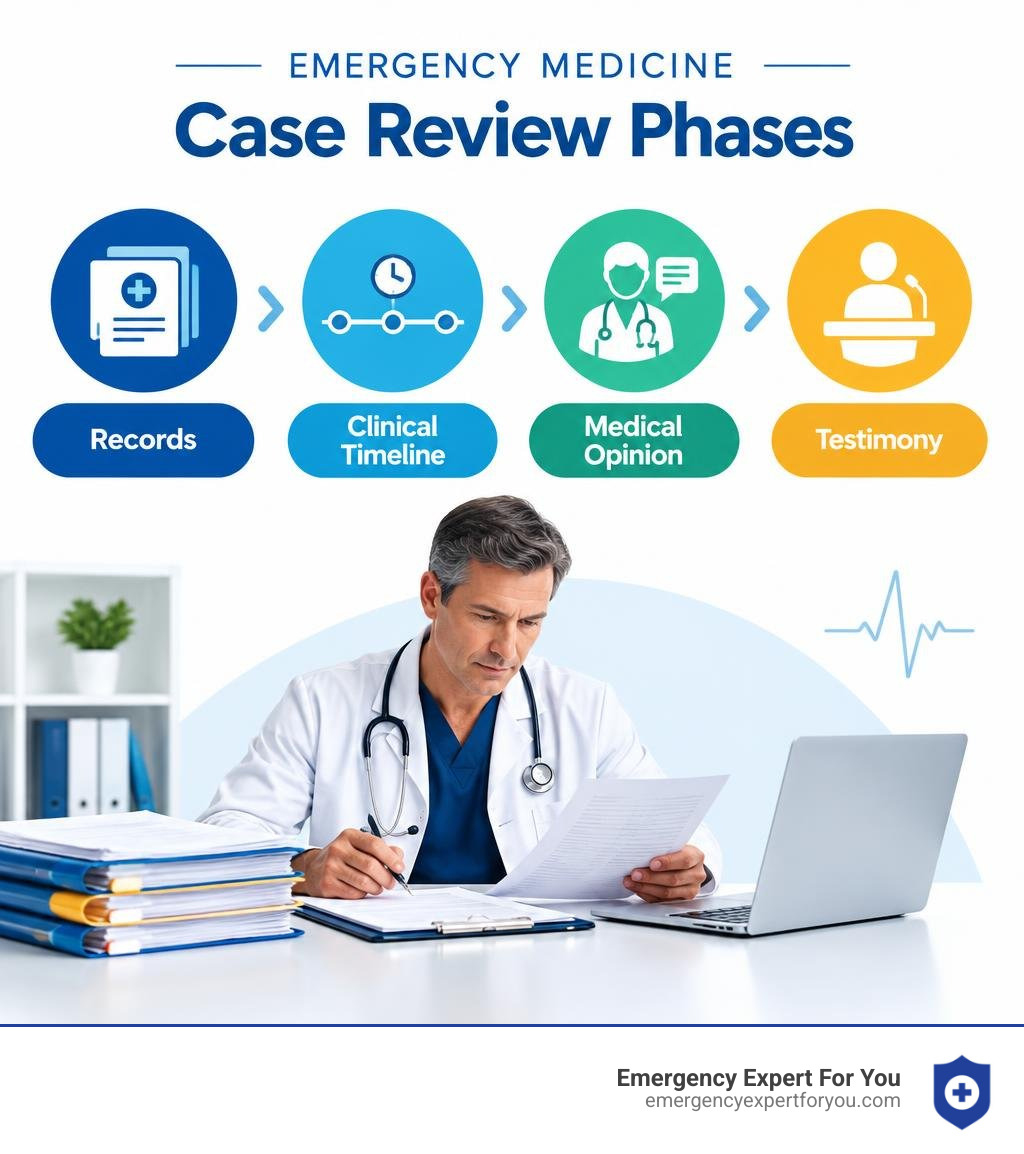
Emergency medicine consulting terms simplified:
Core Dimensions of Emergency Medicine Consulting
Emergency departments (EDs) are environments where physicians must make critical, life-altering decisions under extreme time constraints and with evolving clinical data. Because the clinical realities of the ED differ significantly from outpatient settings, specialized emergency medicine consulting bridges the gap between chaotic bedside realities and structured analytical reviews.
Whether examining standard of care compliance during litigation or conducting an independent audit of complex clinical records, emergency medicine consultants examine patient presentation, differential diagnosis formulation, diagnostic testing, treatment protocols, and monitoring. In legal matters, this objective perspective is essential for evaluating standard of care adherence without falling victim to retrospective outcome bias.
| Dimension | Clinical Record Review | Legal Expert Consulting |
|---|---|---|
| Primary Objective | Objectively analyze acute clinical care, decision timelines, and documentation | Provide objective analysis of standard of care, causation, and injury mechanics |
| Core Deliverables | Clinical chronologies, triage assessments, standard of care evaluations | Detailed chart chronologies, affidavits of merit, written reports, trial testimony |
| Data Evaluated | Triage notes, vital sign logs, lab turnaround, physician notes, discharge charting | Contemporaneous medical records, diagnostic imaging, nursing logs, EMS run sheets |
| Key Stakeholders | Legal counsel, clinical review committees, risk managers | Plaintiff attorneys, defense counsel, courts, and claims adjusters |
| Governing Focus | Identifying clinical adherence or deviations based on contemporaneous data | Adherence to emergency medicine standards of care based on available data |
Clinical Operations and Quality of Care
When evaluating emergency care, consultants examine how clinical workflows, triage classifications, and observation status decisions impacted a patient’s diagnostic trajectory. Reviewing how ED workflows integrated with hospitalist and intensivist teams helps determine whether handoffs and communication met accepted medical standards.
When care breaks down, the necessity of medical expert witnesses becomes evident, as systemic complications often manifest as individual diagnostic delays or charting oversights that require objective analysis.
Legal Case Review and Standard of Care Analysis
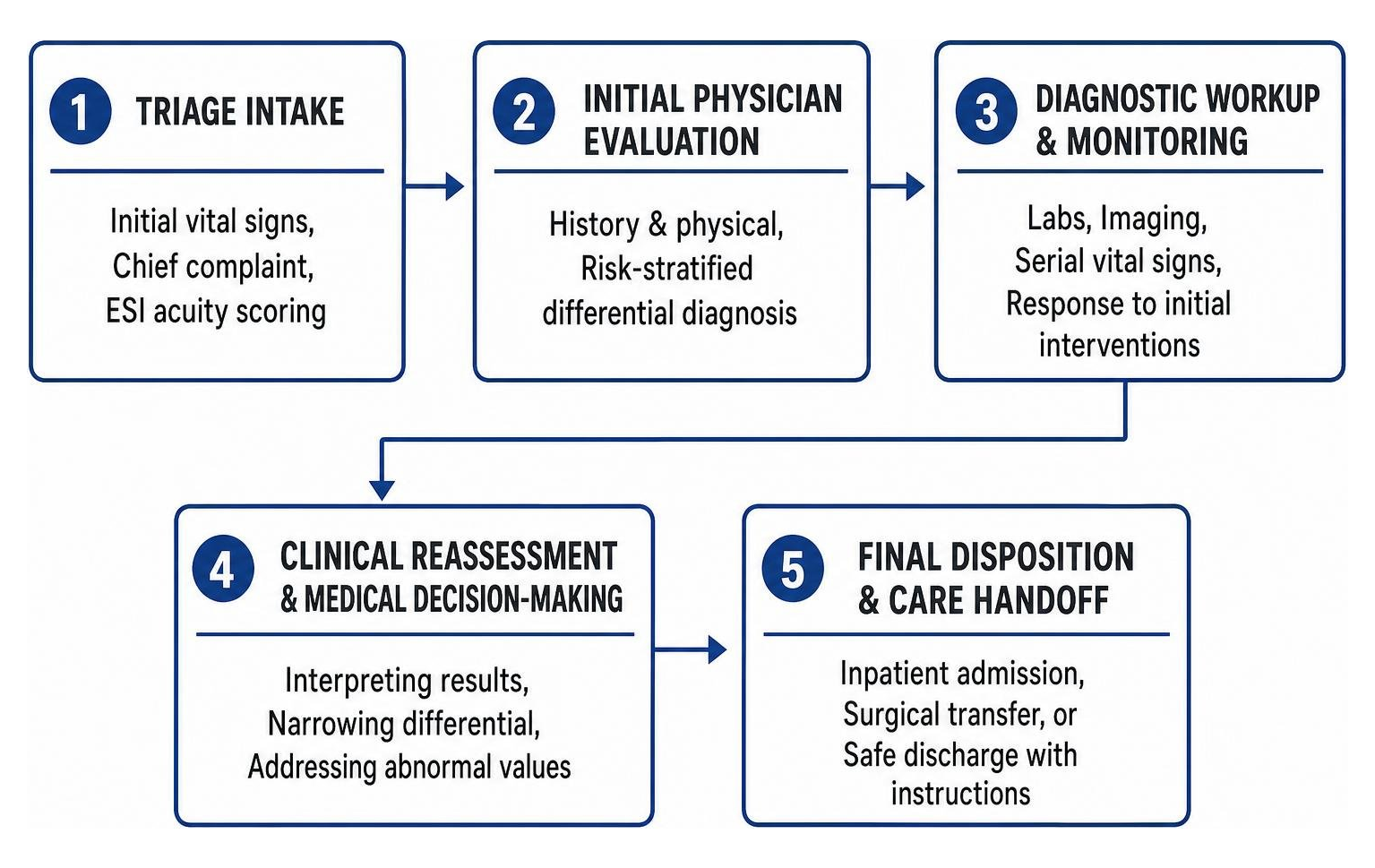
In legal matters, an emergency medicine consultant performs an exhaustive reconstruction of the care timeline. Counsel must understand exactly what information was available to treating clinicians in real time. Standard of care reviews scrutinize:
- The initial nursing triage category and vital signs
- The timeliness of the physician’s initial physical examination
- The formulation of an appropriate, risk-stratified differential diagnosis
- Diagnostic ordering choices (laboratory panels, CT scans, ultrasounds, EKGs)
- Reassessment intervals following clinical interventions
- Discharge instructions and referral or transfer coordination
When evaluating whether standard of care deviations occurred, we analyze the clinical rationale documented by the practitioner rather than judging the case purely by the outcome. This methodical dissection is one of the primary reasons why legal teams retain medical expert witnesses to evaluate complex liability questions.
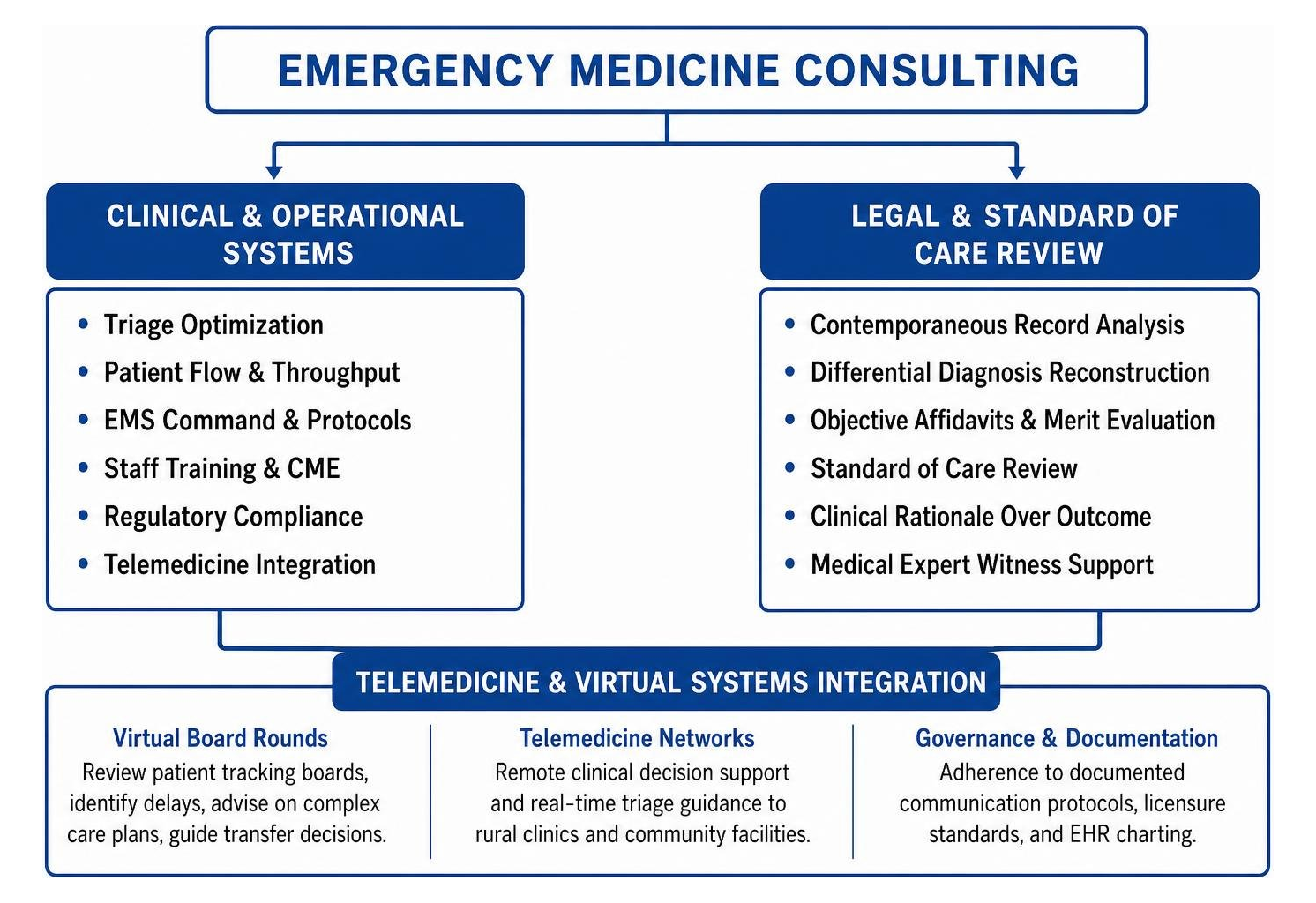
How Telemedicine and Virtual Systems Integrate into Emergency Medicine Consulting
Virtual emergency platforms and telemedicine networks have become increasingly prevalent in acute care. When evaluating cases involving remote clinical decision support, virtual board rounds, or telemedicine triage, an emergency medicine consultant assesses whether remote interactions satisfied accepted emergency care standards.
Evaluating virtual care requires examining electronic health record timestamps, documented audio-visual interactions, and physician communication with on-site staff to ensure that diagnostic and transfer decisions aligned with standard practice.
Clinical, Operational, and Compliance Applications in Healthcare Systems

In complex emergency cases, understanding how pre-hospital protocols, regulatory requirements, and departmental workflows interact is crucial for evaluating clinical decisions.
EMS Medical Direction and Emergency Preparedness
Pre-hospital emergency care operates under defined physician protocols. When legal matters involve Advanced Life Support (ALS) or Basic Life Support (BLS) transport, a consultant evaluates whether field triage, paramedic interventions, and handoff communications adhered to established EMS medical direction.
Evaluating mass casualty incidents (MCIs), field resuscitation efforts, and pre-hospital documentation ensures that attorneys understand the clinical baseline of a patient upon arrival at the emergency department.
Regulatory Compliance, Accreditation, and Training Standards
Emergency departments operate under rigorous clinical standards. Case reviews often require analyzing whether clinical staff possessed mandatory life-support certifications—such as Advanced Cardiovascular Life Support (ACLS) or Pediatric Advanced Life Support (PALS)—and whether documentation complied with statutory and hospital policy requirements.
Departmental Throughput, Staff Retention, and Wellness
High patient volumes, overcrowding, and heavy shift workloads frequently frame the environment in which acute care occurs. When reviewing emergency records, an expert assesses how departmental volume, handoff timing, and shift transitions may have influenced documentation and patient monitoring, providing a factual context for contemporaneous decision-making.
The Strategic Role of Emergency Medicine Consulting in Legal Litigation

In medical malpractice, personal injury, and worker’s compensation litigation, retaining an objective emergency medicine consultant is vital for establishing or refuting standard of care allegations. Dr. Edward Mallory brings board certification by the American Osteopathic Board of Emergency Medicine (since 1993), more than 30 years of Emergency Medicine experience, approximately 13 years of medical expert witness experience, and over 200 medical cases reviewed to every case assessment. Dr. Mallory’s formal written opinions, affidavits, and testimony are strictly limited to Emergency Medicine and Primary Care.
Understanding the value of a medical expert witness allows both plaintiff and defense counsel to approach complex medical records with clear, evidence-based expectations.
Evaluating Triage, Diagnostic Testing, and Treatment Timelines
Emergency litigation often hinges on timing. A thorough consultation assesses:
- Triage Stratification: Did the nursing staff assign an appropriate Emergency Severity Index (ESI) score based on presenting complaints and abnormal vital signs?
- Diagnostic Decision-Making: Did the physician order appropriate imaging, laboratory panels, or EKGs to rule out “worst-first” life threats?
- Turnaround and Reassessment: Were abnormal diagnostic values acknowledged and acted upon within a clinically reasonable timeframe?
- Disposition Planning: Were discharge criteria met, including documented stability, comprehensive discharge instructions, and clear return precautions?
In personal injury matters, such as motor vehicle collision evaluations and independent medical examinations (IMEs), understanding the acute traumatic presentation is essential. When conducting a plaintiff expert witness case evaluation, this timeline analysis provides a clear perspective on the medical facts.
Differentiating Negligence from Complications in Emergency Settings
A cornerstone of objective consulting is the fundamental principle that a poor medical outcome alone does not establish medical negligence. Emergency physicians routinely care for critically ill patients presenting with vague, atypical, or rapidly evolving symptoms.
To determine whether the standard of care was met, an expert must review the medical records, patient presentation, information available to treating physicians at the time, and documented clinical decisions in context. We never assume negligence occurred simply because an adverse outcome developed, nor can negligence be determined in hypothetical scenarios without evaluating the complete medical documentation. When evaluating defense strategies with a medical expert witness, this contextual standard protects against hindsight bias and ensures that clinicians are judged fairly on their contemporaneous decision-making.
Translating Complex Emergency Records into Trial Testimony
Medical charting in the emergency department relies on shorthand notations, timestamped telemetry strips, and complex diagnostic imaging reports. A primary duty of an expert witness is translating this technical language into plain, accessible explanations for judges and juries.
Through clear written opinions, thorough deposition testimony, and compelling courtroom presentations, an experienced expert explains how diagnostic decisions were made. Attorneys preparing for high-stakes proceedings benefit from mastering expert witness testimony in high-stakes trials to ensure complex physiological mechanisms are communicated credibly and objectively.
Selecting and Engaging Emergency Medicine Consulting Services
Retaining the right medical consultant requires careful due diligence regarding qualifications, communication skills, and clinical background. Knowing how to determine if you need a medical expert witness early in litigation helps legal teams manage case resources effectively.
Essential Qualifications and Credentials to Demand in Emergency Medicine Consulting
When vetting an emergency medicine expert, legal teams should verify:
- Board Certification: Current or foundational board certification by recognized bodies, such as the American Osteopathic Board of Emergency Medicine or the American Board of Emergency Medicine.
- Substantial Clinical Background: Decades of direct bedside patient care in high-acuity emergency departments.
- Balanced Perspective: Experience providing unbiased reviews for both plaintiff and defense counsel.
- Specialty Alignment: Alignment between the case issues and the expert’s documented scope of practice; why specialized qualifications matter for medical experts is critical when facing Daubert or Frye admissibility challenges.
Pricing Models, Fee Structures, and Demonstrating Measurable ROI
Emergency medicine consulting services generally utilize standard professional fee structures, such as hourly rates for chart reviews, depositions, and courtroom testimony, or defined flat-fee schedules for initial record screenings and affidavits of merit.
Engaging an independent physician consultant early delivers a clear return on investment by identifying unviable claims before significant litigation expenses are incurred, highlighting key medical theories, and streamlining deposition preparation.
Frequently Asked Questions About Emergency Medicine Consulting
What services are typically covered under emergency medicine consulting?
Emergency medicine consulting encompasses comprehensive medical record audits, standard of care evaluations, differential diagnosis reconstructions, written expert opinions, affidavits of merit, deposition testimony, and courtroom trial testimony.
How do consultants measure improvements in patient safety and litigation risk?
In clinical evaluations, consultants review objective quality markers such as door-to-provider times, diagnostic turnaround, and documentation completeness. In legal settings, risk is clarified through early, evidence-based case screenings that distinguish defensible care from standard of care deviations.
When should legal counsel retain an emergency medicine consultant?
Attorneys should engage an expert early in the case evaluation phase. Retaining an expert prior to filing suit ensures that initial pleadings align with verifiable clinical standards and statutory affidavit deadlines. Counsel should review best practices for properly preparing to consult an expert witness to ensure an organized record delivery and an efficient preliminary conference.
Conclusion
Navigating the complexities of acute clinical care requires specialized, objective medical analysis. Whether counsel is evaluating an emergency department chart for potential deviations or defending a practitioner’s contemporaneous decision-making, an independent perspective is essential.
Based in Cocoa Beach, Florida, Emergency Expert For You provides unbiased, prompt, and clear emergency medicine and primary care expert witness services—including medical record reviews, written opinions, affidavits, and courtroom testimony—for both plaintiff and defense attorneys nationwide.
To explore how an objective clinical review can clarify the medical facts in your next matter, learn what is a medical expert witness and contact Dr. Edward Mallory to schedule a professional case consultation.