Find the Right Emergency Medicine Expert for Trial Preparation
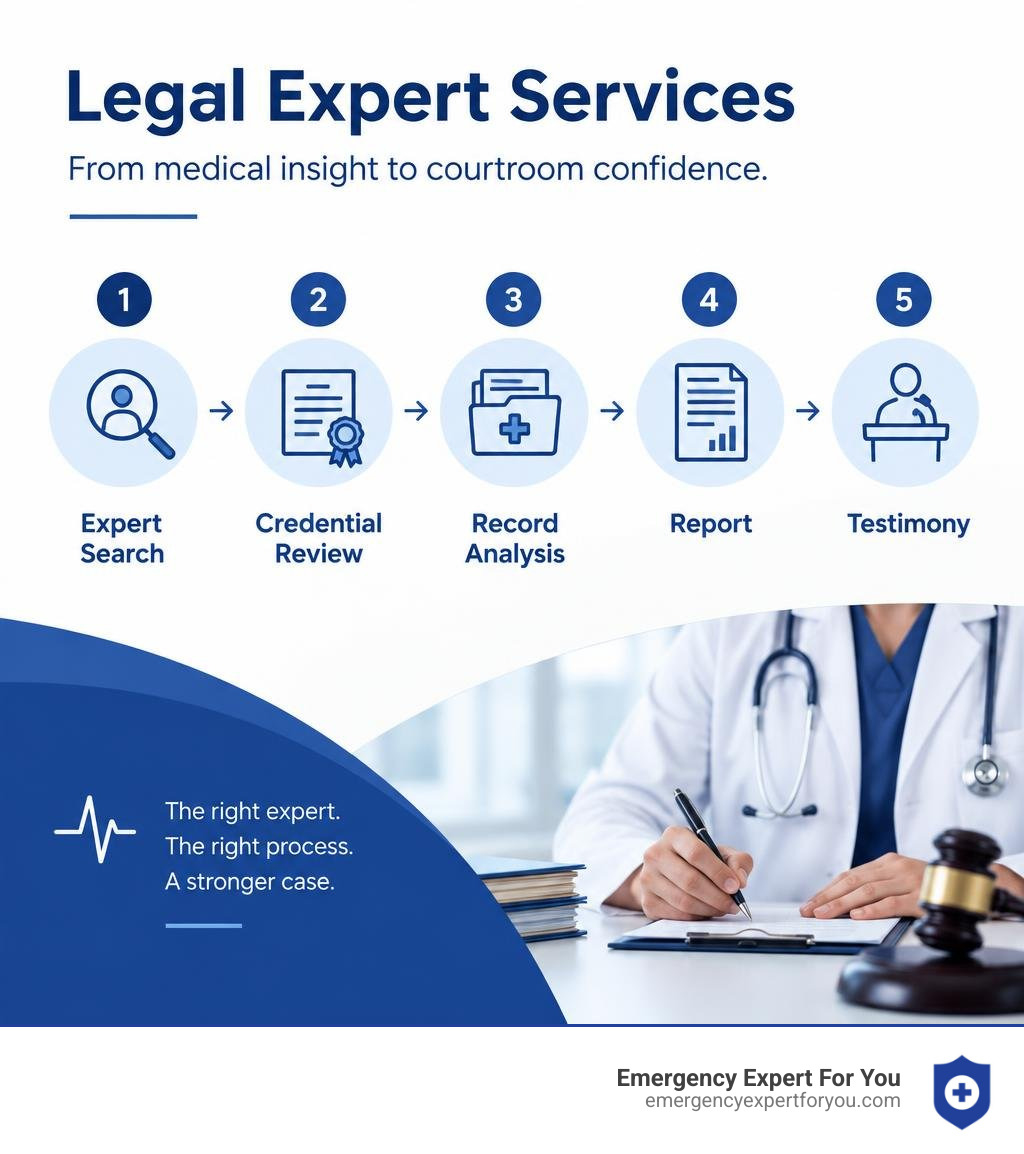
To find qualified legal expert services for an emergency medicine matter, start with the medical issue – not the size of the network. Look for an independent, emergency medicine, board-certified physician whose experience fits the patient presentation and care decisions at issue. Confirm that the expert can review records objectively, explain emergency department standards of care in plain language, and remain available for reports, deposition, and trial testimony if needed.
For a focused search, ask:
- Does the physician have relevant Emergency Medicine experience and current board certification?
- Can they assess the timeline, differential diagnosis, testing, treatment, monitoring, discharge, consultation, or transfer decisions involved?
- Do they use a clear, evidence-based record-review process for either plaintiff or defense matters?
- Can they handle sensitive medical records through secure, reliable document-sharing practices?
The best expert relationship combines efficient digital record access with direct physician-to-attorney communication. Technology can organize large chart sets and keep deadlines on track, but it cannot replace informed clinical judgment about what happened in the emergency department.
I am Dr. Edward Mallory, an independent Emergency Medicine physician who provides objective medical record review and expert witness services for attorneys on both sides of emergency-care matters.
Key Pillars of Modern Legal Expert Services
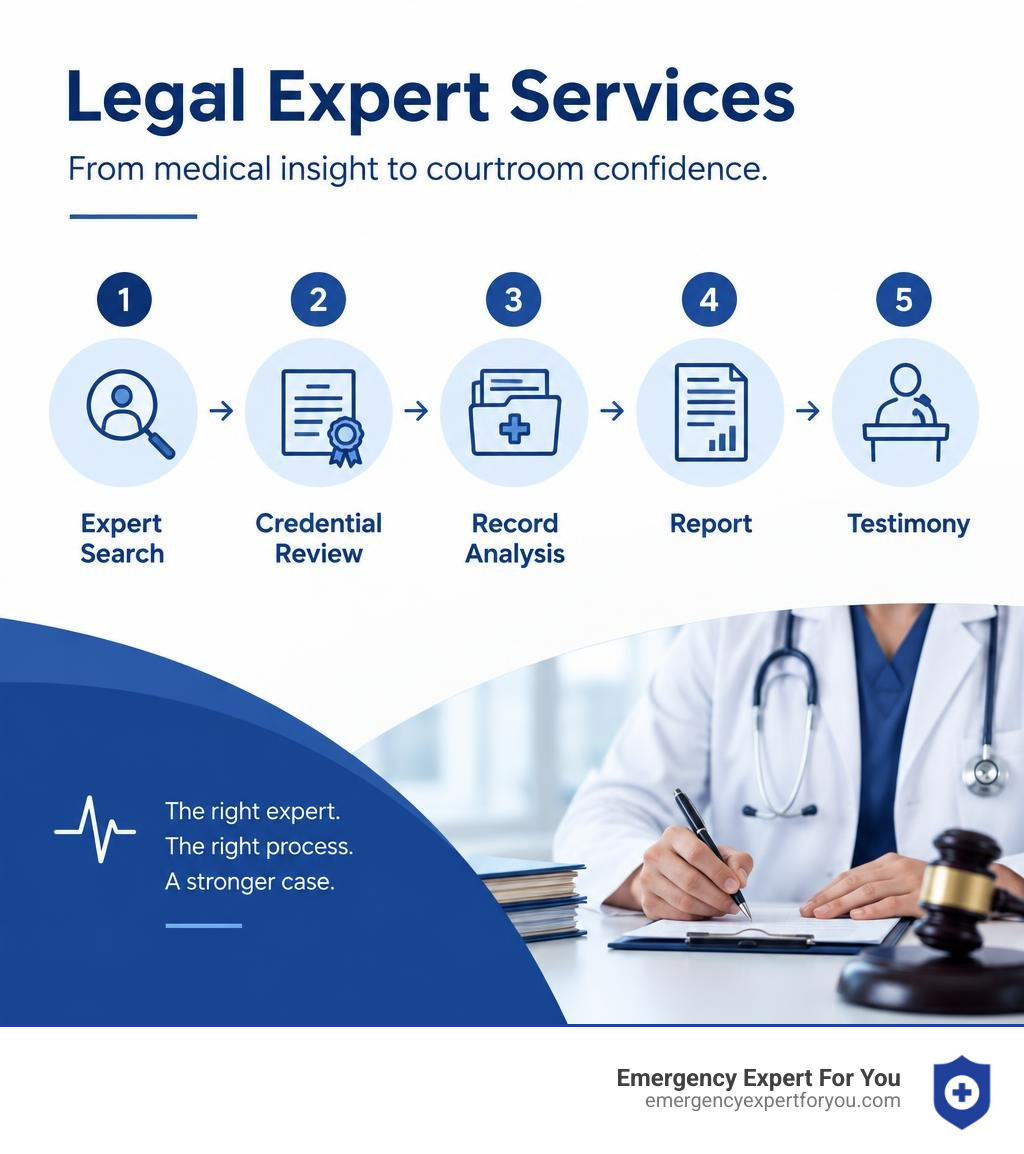
Modern trial preparation operates in an environment where legal technology and specialized clinical insight must work hand in hand. Current industry data reveals that 89% of corporates believe their firms should be exploring more innovative ways to use technology. From automated matter management systems to advanced e-discovery repositories, digital tools have reshaped how legal teams organize, categorize, and review voluminous case files.
However, technology alone cannot interpret a complex clinical scenario. Legal operations platforms like SimpleLegal excel at spend management, billing, and invoicing—scoring 4.8 out of 5 in operational metrics—while enterprise e-discovery platforms such as Relativity lead in document management (scoring 4.8 out of 5) and customizable workflows (scoring 4.7 out of 5). Yet, when a case turns on medical decision-making in an acute care setting, litigators must bridge the gap between digital data organization and specialized medical interpretation. This is why do I need an expert witness becomes a central operational question for trial teams building an objective, evidence-based foundation.

Integrating Specialized Legal Expert Services into Trial Workflows
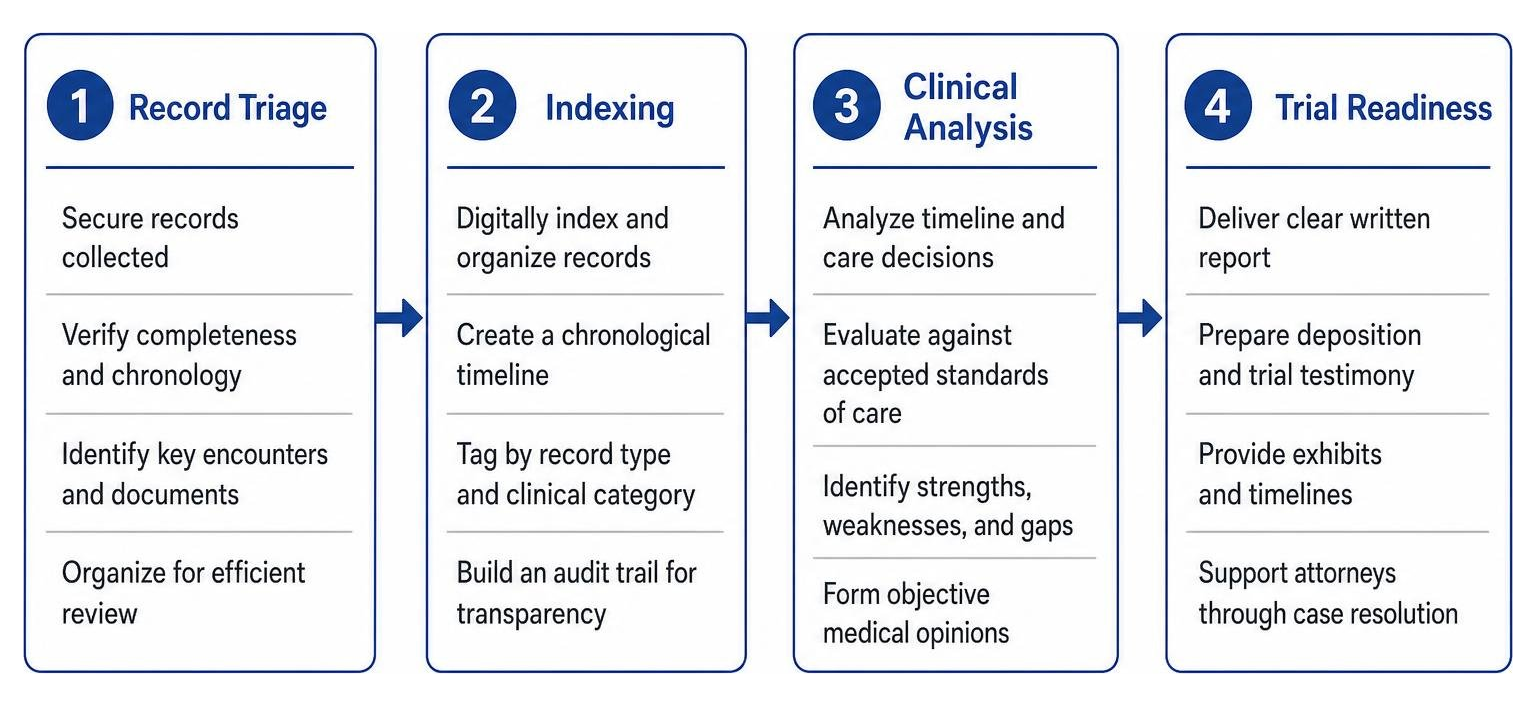
Integrating medical expertise into trial preparation early prevents legal teams from misallocating resources on non-viable theories or overlooking subtle clinical documentation. Workflow automation and cloud-based file indexing allow counsel to rapidly ingest thousands of pages of Electronic Health Records (EHR), emergency department nursing notes, cardiac telemetry strips, and radiology reports.
Once these files are assembled, counsel must determine whether the clinical evidence warrants formal expert engagement. Learning how to determine if you need a medical expert witness involves assessing whether the core dispute hinges on the standard of emergency medical care, diagnostic testing protocols, patient triage timing, or physician-to-physician handoffs. When an independent specialist reviews these records early within your digital workflow, the medical facts are established before depositions commence.
Demonstrating ROI and Value from Legal Expert Services
Investing in specialized medical review provides tangible financial and operational value by filtering out non-meritorious claims and identifying key medical strengths or vulnerabilities early. Nearly half of corporates (47%) report that the primary way legal service providers deliver substantial value is by committing to a long-term partnership built on reliable, objective analysis.
Understanding the value of a medical expert witness involves looking at risk mitigation. When an independent emergency physician conducts an objective merit screening, law firms avoid the significant expense of protracted discovery on matters where the medical evidence does not substantiate a breach of the standard of care. Conversely, for meritorious matters, a clear written opinion anchors settlement discussions and deposition outlines in sound medical science.
Essential Criteria for Selecting Expert Witnesses and Support Platforms
Selecting an expert witness requires strict evaluation standards. While general expert networks provide vast directories, they often lack granular clinical vetting for specific subspecialties. In litigation involving emergency departments or urgent care encounters, counsel must ensure that the expert’s clinical background matches the precise environment where care was rendered.
| Evaluation Metric | Specialized Medical Expert Review | Generalized Legal Tech / Platform Directories |
|---|---|---|
| Primary Focus | Standard of care, differential diagnosis, clinical causality | High-volume keyword matching, matter workflow tracking |
| Clinical Depth | Active, board-certified physician evaluation | Algorithmic indexing without clinical interpretation |
| Objectivity | Evidence-based analysis for plaintiff or defense | Neutral database matching without medical merit screening |
| Testimony Scope | Emergency Medicine, Primary Care, acute triage | Broad multi-industry directory listings |
| Best Applied To | Complex medical malpractice, personal injury, IMEs | General spend tracking, e-discovery, vendor oversight |
Attorneys must recognize that not just any doctor can be a medical expert witness. An expert must possess active clinical perspective, understand how emergency physicians prioritize diagnostic pathways during acute crises, and hold recognized board certifications to offer authoritative, clear testimony.
Balancing Cutting-Edge Technology with Hands-On Subject Matter Expertise
Modern litigation requires a balance between digital efficiency and direct human collaboration. While e-discovery software can identify every mention of an abnormal lab value across 5,000 pages of medical charts, it cannot explain why an emergency physician chose a specific differential diagnosis based on the patient’s physical presentation at 2:00 AM.

This is why modern law firms need medical expert witnesses who can combine technology-enabled chart reviews with hands-on medical evaluations. It is critical to emphasize that a poor medical outcome alone does not establish medical negligence. Clinical medicine involves inherent uncertainties; patient presentation, atypical symptoms, available diagnostic tools, and documented clinical decision-making must be evaluated strictly within the context of what was known to the treating physician at the time of care. Independent experts provide this balanced perspective without relying on hindsight bias.
Overcoming Data Security, Compliance, and Implementation Hurdles
Handling medical records requires stringent adherence to data security standards, including HIPAA compliance and encrypted file sharing across cloud and on-premises environments. Legal teams and independent experts must maintain secure communication channels that protect sensitive patient health information (PHI) throughout the litigation lifecycle.
Best practices include confirming confidentiality expectations, using clearly labeled email threads, limiting record access to necessary participants, and following HIPAA-aware handling procedures for exchanged records. Establishing these protocols early supports organized, careful collaboration across hybrid and remote legal teams.
Aligning Expert Analysis with Case Strategy Across Complex Matters
A comprehensive medical analysis serves as the backbone for multiple phases of trial preparation, including the drafting of complaints, answers, interrogatories, and deposition outlines. Whether retaining a plaintiff expert witness to establish whether an emergency department evaluation adhered to acceptable standards, or engaging a defendant expert witness to evaluate whether documented clinical care satisfied the standard of care under challenging conditions, independent medical analysis ensures your trial strategy is aligned with clinical realities.
Establishing Seamless Collaboration Between Litigators and Specialists
Clear communication protocols between trial counsel and medical experts prevent misunderstandings and ensure critical statutory deadlines are met. In malpractice litigation, determining who’s on first: malpractice attorney or medical expert witness is essential. Attorneys guide the legal theory and procedural requirements, while the medical expert provides objective, factual analysis of the medical records, diagnostic imaging, and physician charting.
Frequently Asked Questions About Expert Witness Networks
How do specialized expert witness services differ from general legal technology platforms?
General legal technology platforms provide infrastructure for document management, e-billing, and workflow tracking. Specialized expert witness services provide substantive clinical analysis. While software helps organize documents, an independent medical expert reviews clinical timelines, differential diagnoses, testing decisions, and standard-of-care issues, providing written opinions, affidavits of merit, and deposition or trial testimony.
When should litigation teams engage an independent medical expert during trial preparation?
Litigation teams should engage an independent expert as early as possible during the initial case evaluation or pre-suit phase. Early medical record review helps attorneys assess the clinical merits of an emergency medicine matter before committing extensive financial resources to formal discovery.
How are data privacy and regulatory compliance maintained during expert record reviews?
Data privacy is maintained through careful confidential matter handling, limited access to case materials, and attorney-directed procedures for sharing and reviewing records. Sensitive medical records and protected health information should be handled only by the appropriate legal and medical professionals involved in the expert review and trial prep process.
Conclusion
Navigating expert witness networks and legal operations platforms requires selecting partners who combine technological reliability with deep clinical authority. At Emergency Expert For You, Dr. Edward Mallory provides independent, objective Emergency Medicine and Primary Care expert witness services for both plaintiff and defense counsel.
Dr. Mallory brings more than 30 years of Emergency Medicine experience, approximately 13 years of medical expert witness experience, over 200 medical cases reviewed, and board certification by the American Osteopathic Board of Emergency Medicine since 1993. By providing rigorous, unbiased medical record reviews, affidavits of merit, and clear courtroom testimony from our location in Florida, we assist counsel in evaluating complex acute care matters on their true clinical merits.
For counsel seeking to understand what is a medical expert witness and how objective clinical analysis can clarify emergency care issues in your upcoming litigation, we invite you to reach out and discuss your case review needs.